

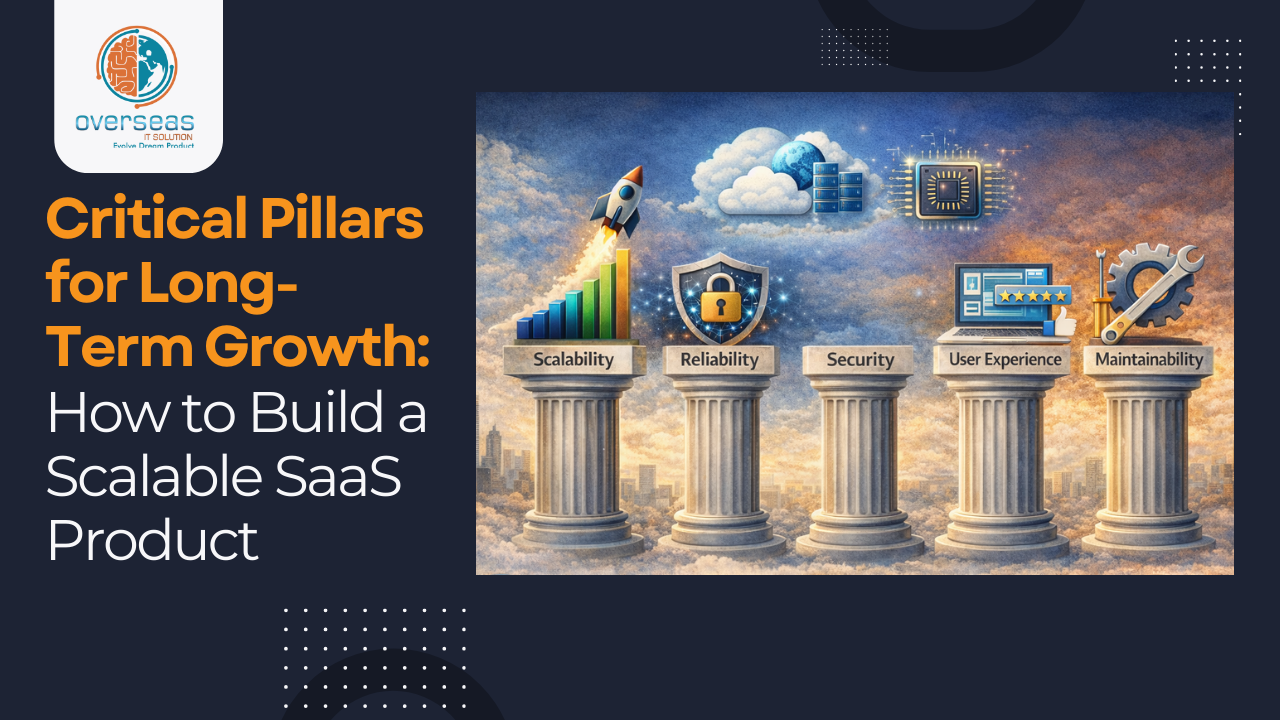
Building a scalable SaaS product in 2026 demands far more than a great idea — it requires intentional architecture, disciplined engineering, and a long-term strategic mindset. Whether you are launching your first MVP, modernizing an existing platform, or scaling a cloud application to serve thousands of concurrent users, this guide covers the core technical and strategic principles you need to succeed. From cloud-native design to security, DevOps, and growth-ready infrastructure, every pillar covered here is essential for sustainable product success.
What Are the Key Aspects of Building a Scalable SaaS Product?
SaaS development differs fundamentally from traditional software development. A scalable SaaS product must be designed to grow with your users, adapt to unpredictable demand, and remain reliable under pressure. Specifically, a production-ready SaaS platform must be:
- Cloud-native and globally accessible
- Designed for multi-tenancy
- Capable of handling unpredictable growth
- Continuously deployable with minimal downtime
This requires careful planning across architecture, infrastructure, DevOps, security, and product strategy. Scalability is not achieved by adding servers later — it is built into the system from day one.
What Are the Core Principles of Scalable SaaS Development?
Before writing a single line of code, successful SaaS teams align around these foundational principles:
1. Start With a Problem That Scales
Your SaaS should solve a problem that becomes more painful as the customer grows. Problems tied to revenue, compliance, productivity, or automation naturally scale with usage and create lasting demand.
2. Design for Scalability and Reliability From Day One
Your system must handle fluctuating loads while maintaining performance and uptime. Scalability should be a core architectural discussion, not a future optimization item left for later sprints.
3. Build Security and Compliance Into the Foundation
Security, data protection, and regulatory compliance must be part of your architecture, infrastructure, and development lifecycle from the very beginning — not bolted on after launch.
4. Embrace CI/CD and Agile Delivery Early
Fast iteration, automated testing, and continuous deployment enable SaaS products to evolve quickly without breaking at scale. Agility and reliability are not in conflict — they reinforce each other.
SaaS Product Development From Scratch: A Scalable Approach
Scalable product development begins with a thorough discovery phase, where business goals, target users, and long-term scalability requirements are clearly defined. Aligning technical strategy with revenue models, compliance needs, and growth plans ensures the product is built on a future-ready foundation. Partnering with an experienced SaaS product development company helps validate assumptions, reduce risks, and create a scalable roadmap from day one.
1. Discovery Phase: Align Business Goals With Technical Strategy
The discovery phase ensures your SaaS vision is grounded in real user needs and technical feasibility. It is essential to validate a SaaS idea without spending money before committing to full development. Start by defining:
- Who exactly will use the product and what industry they are in
- The size of their company and their daily operational challenges
- How they currently solve these problems and where the gaps exist
Strong user personas help define mission-critical use cases, which guide feature prioritization and UX decisions throughout development.
When identifying MVP-defining features, focus on solving one high-priority use case exceptionally well, delivering value within the first few minutes or days of use, and avoiding unnecessary complexity. A scalable MVP is not minimal — it is focused. Ignoring this principle is one of the most common signs your SaaS MVP is failing.
2. Choosing the Right SaaS Architecture
Architecture is the backbone of scalability. For most early-stage SaaS products, a modular monolith is the recommended starting point. It offers faster development, simpler maintenance, and lower operational overhead. As usage grows, individual components — such as billing, authentication, notifications, and analytics — can be extracted into microservices incrementally.
3. Selecting a Growth-Ready Tech Stack
Your tech stack impacts development speed, scalability, hiring, and long-term maintainability. Below are the recommended layers for a modern SaaS platform:
- Frontend: React or Vue with Next.js, server-side rendering for performance and SEO, and component-driven UI systems
- Backend: Node.js, Python (FastAPI), Go, or Java with REST or GraphQL APIs and event-driven, asynchronous processing
- Database: SQL (PostgreSQL/MySQL) for transactional data, NoSQL for flexible or high-volume datasets, and Redis for caching and queues
A scalable SaaS rarely relies on a single database or pattern. Polyglot persistence is increasingly the norm at scale.
4. Infrastructure and Deployment Strategy
Infrastructure choices depend on your growth stage and compliance needs. The primary options available to SaaS teams in 2026 include:
- Public cloud (AWS, Azure, GCP): The default choice for scalability and global reach
- PaaS (Vercel, Heroku): Ideal for MVPs and fast iteration with minimal DevOps overhead
- Containerized environments (Docker + Kubernetes): Best suited for mid-to-large scale products
- Serverless: Cost-efficient for event-driven workloads and unpredictable traffic patterns
Infrastructure should support auto-scaling, high availability, and cost optimization as usage grows.
5. UX/UI Design for Scalable Products
Scalability applies to user experience, not just infrastructure. A product that becomes harder to use as it grows will lose customers regardless of uptime. Scalable UX design includes:
- Role-based dashboards tailored to different user types
- Guided onboarding and in-app tutorials that reduce time-to-value
- Responsive, accessible design meeting WCAG compliance standards
- Interfaces optimized for large datasets and power users
A scalable UX reduces churn, improves activation rates, and supports long-term adoption.
6. DevOps, QA, and Continuous Delivery
Scalable SaaS products rely on automation throughout the development and deployment lifecycle. The core practices that enable this include:
- CI/CD pipelines for automated builds and deployments
- Automated testing covering unit, integration, and end-to-end scenarios
- Performance and load testing to validate behavior under stress
- Security testing and continuous monitoring in production
Testing and deployment are not overhead — they are growth enablers that let teams ship faster with confidence.
How to Scale a SaaS Product Successfully
Scaling is a strategic phase, not a reaction to growth. Teams that treat scaling as a proactive discipline outperform those who scramble when traffic spikes arrive. Proven scaling strategies include:
- Horizontal scaling using containers and orchestration tools like Kubernetes
- Decoupling services so each component can scale independently
- Asynchronous communication between system components using queues and event streams
- Auto-scaling policies based on real usage metrics rather than fixed thresholds
Proper scaling ensures performance, stability, and cost control even during peak demand periods.
Best Practices for Building Scalable SaaS Products
Across all stages of development and growth, the following best practices separate products that scale from those that struggle:
- Choose adaptive architecture — start with a modular monolith and evolve toward microservices as needed
- Design for performance from day one rather than optimizing under pressure later
- Plan for AI and data-driven features early to capitalize on emerging opportunities — including the biggest AI-SaaS ideas for 2026 — and avoid architectural limitations later
- Implement security and compliance at the foundation, not as an afterthought
- Expose well-documented external APIs to support integrations and ecosystem growth
Final Thoughts
Building a scalable SaaS product in 2026 requires more than modern tools — it demands intentional design, disciplined engineering, and long-term thinking. Scalability is not something you add later. It is the result of aligning business strategy, architecture, technology, security, and operations around sustainable growth.
Teams that invest early in scalable foundations move faster, serve customers better, and avoid costly rework as their product succeeds. The six pillars covered in this guide — discovery, architecture, tech stack, infrastructure, UX, and DevOps — form the blueprint for a product that grows with its users rather than against them.
Your SaaS does not need more features. It needs the right foundation for growth.
Talk to our SaaS experts for scalable architecture planning, MVP-to-scale roadmaps, performance, security, and DevOps audits, and long-term SaaS growth strategy. Build smart SaaS Software at Overseas IT Solution.